- Prediction of diabetic retinopathy phenotype (Fluorescein FA classification) among Egyptian patients with type I diabetes and its genotype relation.
- Detection of the value of new biochemical predictors of pre-proliferative stage of diabetic retinopathy among Egyptians
- To investigate the genetic polymorphisms of sorbitol dehydrogenase (SDH) and vascular endothelial growth factor (VEGF) genes in Egyptian patients with types I diabetes mellitus and to assess their possible role as predictors for the development and progression of diabetic retinopathy.
- To assess the incidence of the nephropathy, neuropathy and coronary heart disease in all diabetic patients participated in the project and correlate this with the stage of the retinopathy, biochemical results and to evaluate the role of genetic causes in the pathogenesis of these complications and their progression.
- Training of work team and junior ophthalmologists.
- The project provides follow-up and family medical history, and a comprehensive medical examination and ECG analysis and a family pedigree. With conducting laboratory tests to measure Fasting & P.P. Blood glucose level, Total lipid profile, measuring kidney function, Glycated hemoglobin, special laboratory tests to predict the occurrence of diseases of the retina for a diabetic.
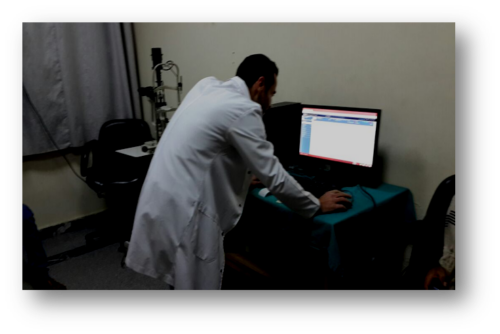
- A polyclinic for diabetics (multidisciplinary) has been set up and provides full ophthalmologic examination, medical and genetics, as well as analyzes necessary medical and fundus fluorescein angiography , periodic follow-up, analysis and treatment to make sure to adjust the dose therapy and early intervention in case of any complications.
- Also provides the place to turn to diabetics to receive appropriate care, which includes periodic follow-up for the eyes to reduce the risk of this disease in order to combat one of the most important causes of blindness. And follow the patient clinic for four years, and it scans the front and fundus examination using a slit lamp microscope, fundus fluorescein angiography and OCT.
- It has been found that the proportion of patients with diabetic retinopathy, constituted 44% of patients with type I diabetes mellitus
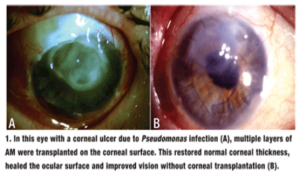
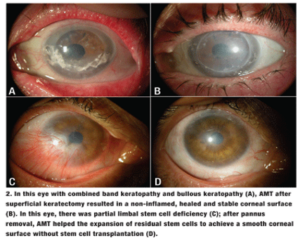
The project aims to restore the transparency of the cornea and improve vision while avoiding the problems associated with the old and traditional methods to treat such cases as the movable part is rejected in the event of a transfer from another person with a problem of shortage of stem cell allamia in person from the requirement for a large number of cells to move and avoid those problems by taking a small section of stem cells allamia for healthy eye and propagation on amniotic membrane and then replanting the membrane of the infected eye surgically.
- To shed light on the possibility of using some of the attachments and the pharmaceutical and chemical compounds that could prevent and control the oxidative stress of the endoplasm network as a new strategy for a possible cure or reduce the complications of diabetes on the eye.
- The development of diabetic retinal disease and cataracts by infecting a group of experimental animal’s high level of sugar in the blood and being infected with type II diabetes.
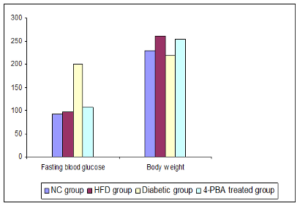
Fasting blood glucose and body weight of experimental rats after injection of (STZ) and treated with (4-PBA)
A population based survey was conducted on a multistage cluster sampling (2009-2010). The total numbers of children who were subjected for ophthalmologic examination, visual assessment, genetic and pediatric examination were 2603 child. About 40% of them were diagnosed to have different eye problems.
Distribution of eye diseases among studied preschool children (The students aged from 0-6 years.)
% | Results of ophthalmic examination |
31.6 | Errors of refraction (Hypermetropia, myopia, astigmatism, anisometropia) |
14.8 | Conjunctiva (MPC, allergic, Papillary, spring catarrh, trachoma ) |
6.0 | Ocular alignment (Esotropia, Exotropia, Hypertropia, Esophoria, Exophoria, Nystagmus) |
2.8 | Eyelids (ptosis, chalazion, blepharitis, NLDO) |
0.4 | Abnormal color vision |
0.3 | Cornea (corneal opacity, ulcer, megalocornea) |
0.31 | Macular dystrophy& optic nerve atrophy |
0.1 | Pupil (pinpoint, anisocoria) |
0.08 | Congenital cataract |
0.04 | Congenital Glaucoma |
- A total of 546 diabetic patients aged between 15-75 years old were attending Research Institute of ophthalmology throughout a period of 4 years were fully assessed including complete history of diabetes mellitus, eye examination and laboratory tests.
- The data collected Showed that the prevalence of Diabetic retinopathy 43%, the distribution of diabetic retinopathy patients according to the grade of retinopathy was mild NPDR 28.7%, moderate NPDR 23.2%, severe NPDR 16.9%, early PDR 8.4% and late PDR 22.8%.