The Medical Retina and Macula Department is a specialized unit dedicated to the diagnosis, treatment, and follow-up of retinal and macular diseases. The department provides comprehensive, patient-centered care using the latest diagnostic and therapeutic technologies. It manages a wide range of conditions, including diabetic retinopathy, age-related macular degeneration, retinal vascular diseases, central serous chorioretinopathy, inherited retinal disorders, and uveitic retinal diseases. Advanced imaging modalities, such as Optical Coherence Tomography (OCT), Fundus Fluorescein Angiography (FFA), and fundus photography, are used to achieve accurate diagnosis and guide treatment decisions. The department offers evidence-based medical treatments, including intravitreal injections, retinal laser therapy, and long-term disease monitoring. Working in close collaboration with other ophthalmology subspecialties, the department ensures integrated management of complex retinal disorders. In addition to its clinical services, the department actively contributes to clinical research, postgraduate education, and continuous professional development. Through excellence in patient care, innovation, and scientific research, the department is committed to preserving vision and improving patients’ quality of life.
To be a center of excellence in the diagnosis, treatment, and prevention of retinal and macular diseases by delivering innovative, patient-centered, and evidence-based care. The Medical Retina and Macula Department aspires to lead in clinical excellence, advanced retinal imaging, research, and education while promoting multidisciplinary collaboration and adopting the latest technologies to preserve vision, improve patients’ quality of life, and advance the field of medical retina.
- To provide comprehensive, evidence-based care for patients with retinal and macular diseases through accurate diagnosis, advanced treatment, and continuous follow-up.
- To preserve and improve vision by utilizing the latest diagnostic imaging technologies and therapeutic modalities.
- To deliver safe, high-quality, patient-centered services in accordance with international standards of ophthalmic care.
- To promote clinical research and innovation in the field of medical retina and macular diseases.
- To support the education and training of ophthalmologists, residents, and allied healthcare professionals.
- To foster multidisciplinary collaboration in the management of complex retinal disorders and contribute to the institute’s academic and clinical excellence.
- Comprehensive retinal examination using slit-lamp biomicroscopy and indirect ophthalmoscopy.
- Optical Coherence Tomography (OCT) for detailed assessment of retinal and macular disorders.
- Optical Coherence Tomography Angiography (OCTA) for non-invasive evaluation of retinal and choroidal vasculature.
- Fundus Fluorescein Angiography (FFA) for the diagnosis of retinal vascular diseases.
- Indocyanine Green Angiography (ICGA) for the evaluation of choroidal disorders.
- Color fundus photography and fundus autofluorescence imaging for retinal documentation and disease monitoring.
- Intravitreal injection therapy using anti-VEGF agents and corticosteroids.
- Retinal laser photocoagulation for diabetic retinopathy, retinal vein occlusion, and other retinal disorders.
- Medical management and long-term follow-up of retinal and macular diseases using evidence-based treatment protocols.
- Multimodal retinal imaging for diagnosis, treatment planning, and monitoring of disease progression.
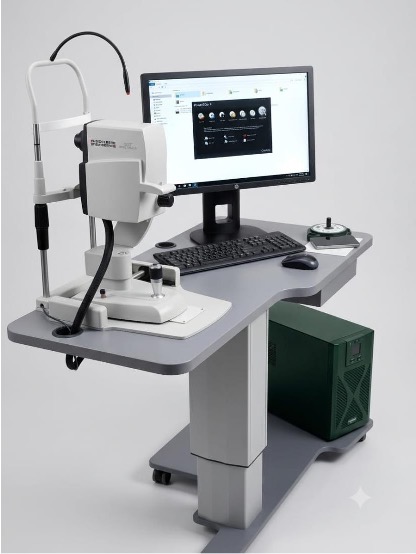
Optical Coherence Tomography (OCT)
- Access to a comprehensive retinal imaging database (OCT, OCT-A, fundus photography, fluorescein angiography).
- Clinical data registry for retinal and macular diseases (e.g., AMD, diabetic macular edema).
- Support for prospective and retrospective clinical studies.
- Biostatistics and data analysis support for research projects.
- Institutional Review Board (IRB) and ethics committee guidance for study approval.
- Access to advanced diagnostic and imaging equipment for research purposes.
- Collaboration opportunities with multidisciplinary teams (ophthalmology, endocrinology, neurology).
- Participation in clinical trials for new therapies (anti-VEGF, gene therapy, retinal implants).
- Research training workshops in retinal imaging interpretation and methodology.
- Access to electronic medical records for approved research studies.
- Publication support including manuscript writing and journal submission guidance.
- Opportunities for presenting research in local and international conferences.
- Patient recruitment facilitation for eligible research protocols.
- Data storage and secure research information systems.
- Collaboration with pharmaceutical and industry-sponsored research projects.
- Comprehensive retinal and macular eye examinations.
- Advanced diagnostic imaging including OCT, OCT-A, fundus photography, and fluorescein angiography.
- Screening and management of diabetic retinopathy and diabetic macular edema.
- Diagnosis and treatment of age-related macular degeneration (wet and dry forms).
- Intravitreal injections (anti-VEGF, steroids, and other approved therapies).
- Laser treatments for retinal vascular diseases and macular conditions.
- Management of retinal vein occlusion and associated complications.
- Evaluation and follow-up of macular holes, epiretinal membranes, and vitreomacular traction.
- Urgent care for sudden vision loss or retinal emergencies.
- Regular monitoring programs for chronic retinal diseases.
- Counseling and education for patients regarding disease progression and treatment plans.
- Low-vision support and rehabilitation referral when needed.
- Second opinion consultations for complex retinal cases.
- Follow-up care after retinal surgery or interventions.
Coordination with other specialties for systemic disease-related eye conditions.
The Medical Retina and Macula Department is committed to providing high-quality education and professional development through structured training programs for ophthalmologists, residents, fellows, optometrists, and allied healthcare professionals. Training focuses on both theoretical knowledge and practical skills in the diagnosis and management of retinal diseases.
- Comprehensive evaluation of retinal and macular diseases.
- Interpretation of retinal imaging (OCT, OCT-A, fundus photography, fluorescein and indocyanine green angiography).
- Diagnosis and management of diabetic retinopathy and diabetic macular edema.
- Management of age-related macular degeneration and other macular disorders.
- Hands-on training in intravitreal injection techniques.
- Laser treatment techniques for retinal vascular diseases.
- Clinical decision-making and evidence-based management of medical retinal conditions.
- Participation in multidisciplinary case discussions and journal clubs.
- Clinical research methodology and scientific publication skills.
- Continuous medical education (CME), workshops, seminars, and conference participation.